
Journal · 26 July 2026
Kari Manjal: What Actually Makes Kari Manjal Genuine
It's rare, it's expensive, and no shortage of powders claim the name anyway. Here's what we actually look for — from leaf markings to rhizome color — before anything gets ground into a jar as genuine Kari Manjal.
Kari Manjal: What Actually Makes Kari Manjal Genuine
Anyone who's gone looking for Kari Manjal has run into the same problem: it's rare, it's expensive, and there's no shortage of powders willing to claim the name anyway.
Here's what we look for before anything gets ground into a jar.
Rare Isn't a Marketing Word Here
Curcuma caesia doesn't grow in cultivated rows. It's found scattered through forest patches in the Western Ghats, and unlike cultivated turmeric, there's no simple way to plant more of it to meet demand.
That scarcity has a real cost. In parts of its native range, unregulated wild collection has pushed the plant toward becoming endangered — taken faster than forests can naturally replace it. So for us, "wild-sourced" isn't a selling point on its own. It only means something if the harvesting behind it is careful and limited.
We keep our batches small on purpose, sourced from harvesters who take a little and move on, rather than clearing a patch in one go.
The Two Tells That Don't Lie
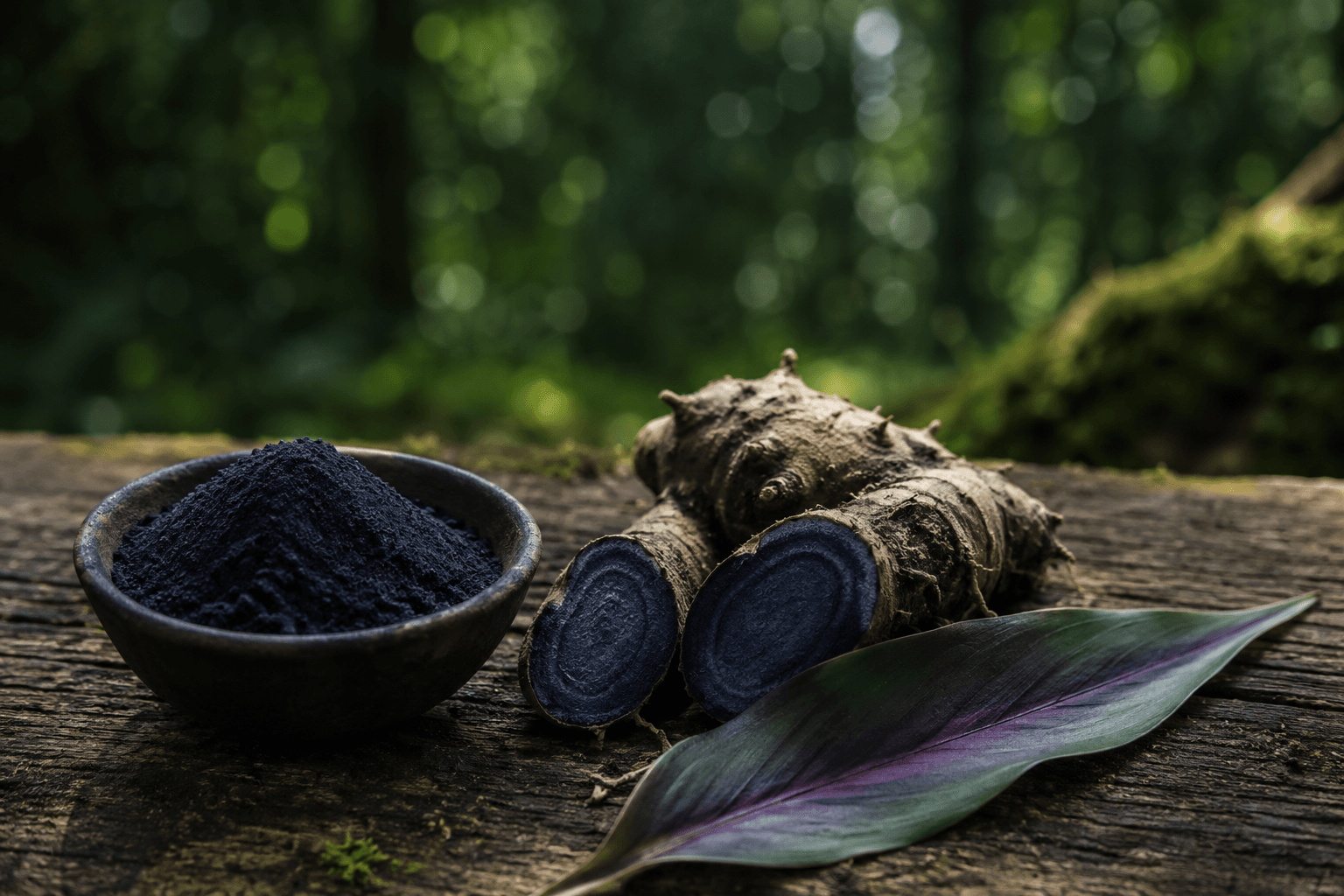
Before a rhizome is ever dug up, the plant gives itself away — a violet-red streak running down the center of each leaf, distinct from any other turmeric relative growing nearby.
Below ground is the tell that matters most once it's powdered: a blue-black interior, not orange, not cream. If a powder sold as Kari Manjal looks yellow or orange in any way, it isn't Kari Manjal, regardless of what the label says.
Dried Slow, On Purpose
Once harvested, the rhizomes are washed and left to dry in the shade — never direct sun. Sun-drying is quicker, but it dulls the color and burns away some of the sharp, resinous aroma that's supposed to be there.
After drying, it's milled into a fine, dark powder, with nothing blended in to stretch a naturally small harvest further than it should go.
Small Batches, Season to Season
Because supply depends entirely on what's responsibly found each season, quantity — and sometimes aroma intensity — will vary more here than with our other products. That's not an inconsistency to smooth over. That's just what honestly sourcing a rare, wild plant looks like.
Pure. Traceable. From our farm to your home.