
Journal · 26 July 2026
Kasturi Manjal: Sourcing It Right, Not Just Sourcing It
Half of what's sold as Kasturi Manjal isn't the real thing. Here's how we source Curcuma aromatica specifically, shade-dry it to protect its aroma, and keep the batch honest instead of standardized.
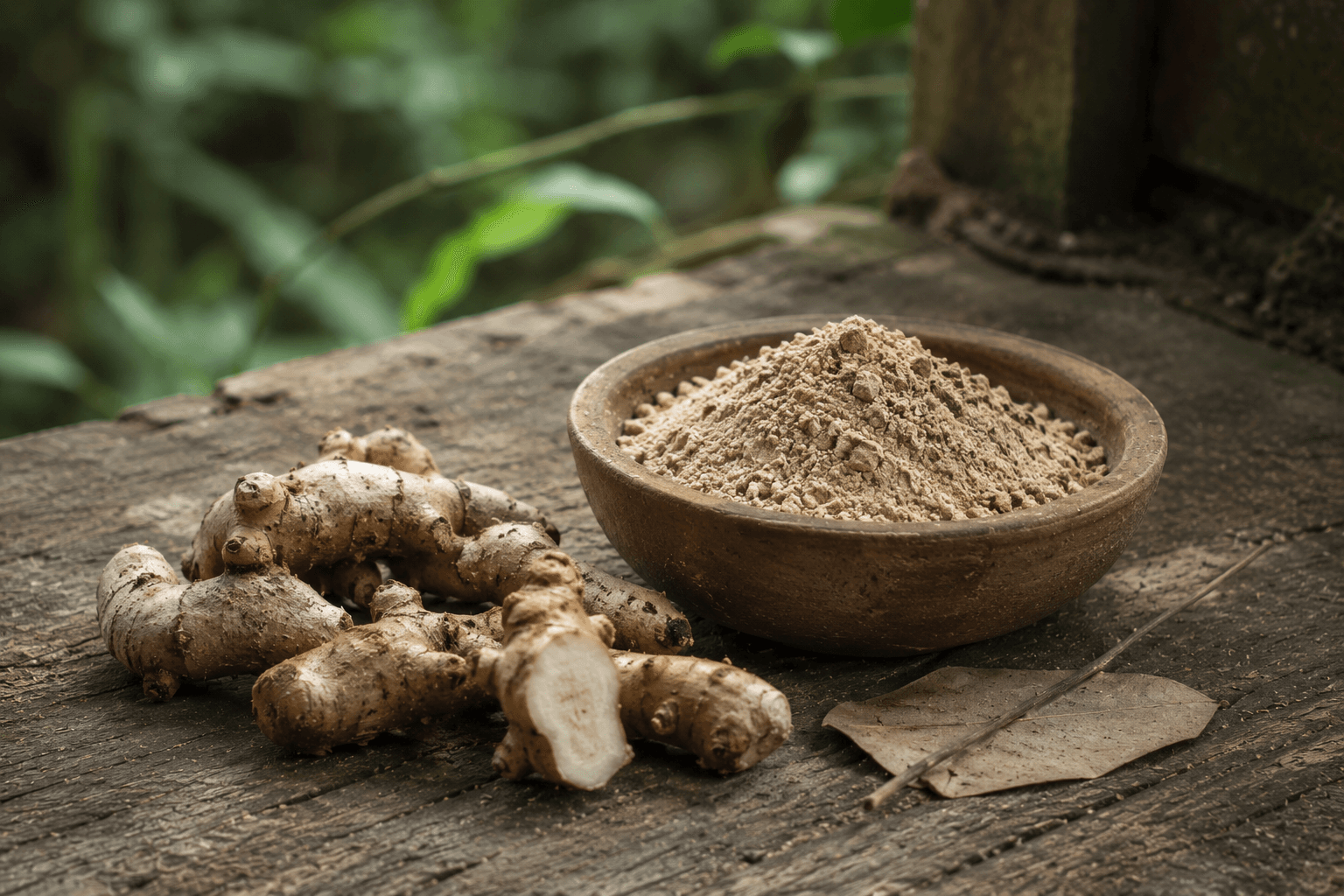
Kasturi Manjal: Sourcing It Right, Not Just Sourcing It
If you already reach for Kasturi Manjal, you know the frustration. Half of what's sold under that name isn't the real thing — and once it's ground into powder, there's no easy way to tell from a glance.
Here's how we make sure what's in our jar actually is what it says it is.
The Substitution Problem
A lot of "Kasturi Manjal" in the market is actually Curcuma zedoaria — a different rhizome entirely, sold under the same name because it's cheaper to source and looks close enough once powdered. It doesn't carry the same aroma, and it doesn't behave the same way on skin.
Genuine Kasturi Manjal is Curcuma aromatica — cream to light brown, with a sharp camphor-musk aroma that's hard to fake and easy to notice once you know it. If a batch smells flat, sweet, or faintly like regular turmeric, that's usually the tell.
We source rhizomes we can trace back to specific wild-growing patches in Kerala, rather than buying pre-ground powder from a mixed supply chain. That's the only real way to know what you're getting.
Why We Shade-Dry, Not Sun-Dry
Most turmeric processing leans on direct sun to dry things fast. We don't do that here.
Kasturi Manjal loses its aroma quickly under harsh sun — the compounds that give it that camphor-musk scent are more volatile than the ones in cooking turmeric. Shade-drying takes longer, but it protects the aroma and keeps the rhizome's natural pale color from darkening the way sun-dried batches often do.
If your Kasturi Manjal looks more yellow-orange than cream, that's often a sign it was either sun-dried too aggressively, or it wasn't the right species to begin with.
Ground Fine, Nothing Else
Once dried, the rhizomes are milled into a fine powder — no sieving in fillers, no rice flour or sandalwood added to bulk out the batch, both of which show up more often than you'd expect in commercial packs to stretch supply.
What's in the jar is rhizome, dried and ground. That's the whole ingredient list.
What to Expect Batch to Batch
Because we're not blending across sources to standardize it, you may notice slight variation in aroma intensity or shade between batches — stronger in some, milder in others, depending on the season's harvest. That's a sign we're not smoothing anything over, not a quality issue.
Pure. Traceable. From our farm to your home.