Journal · 26 July 2026
Cheru Thenu Honey: The Smaller, Slower Honey
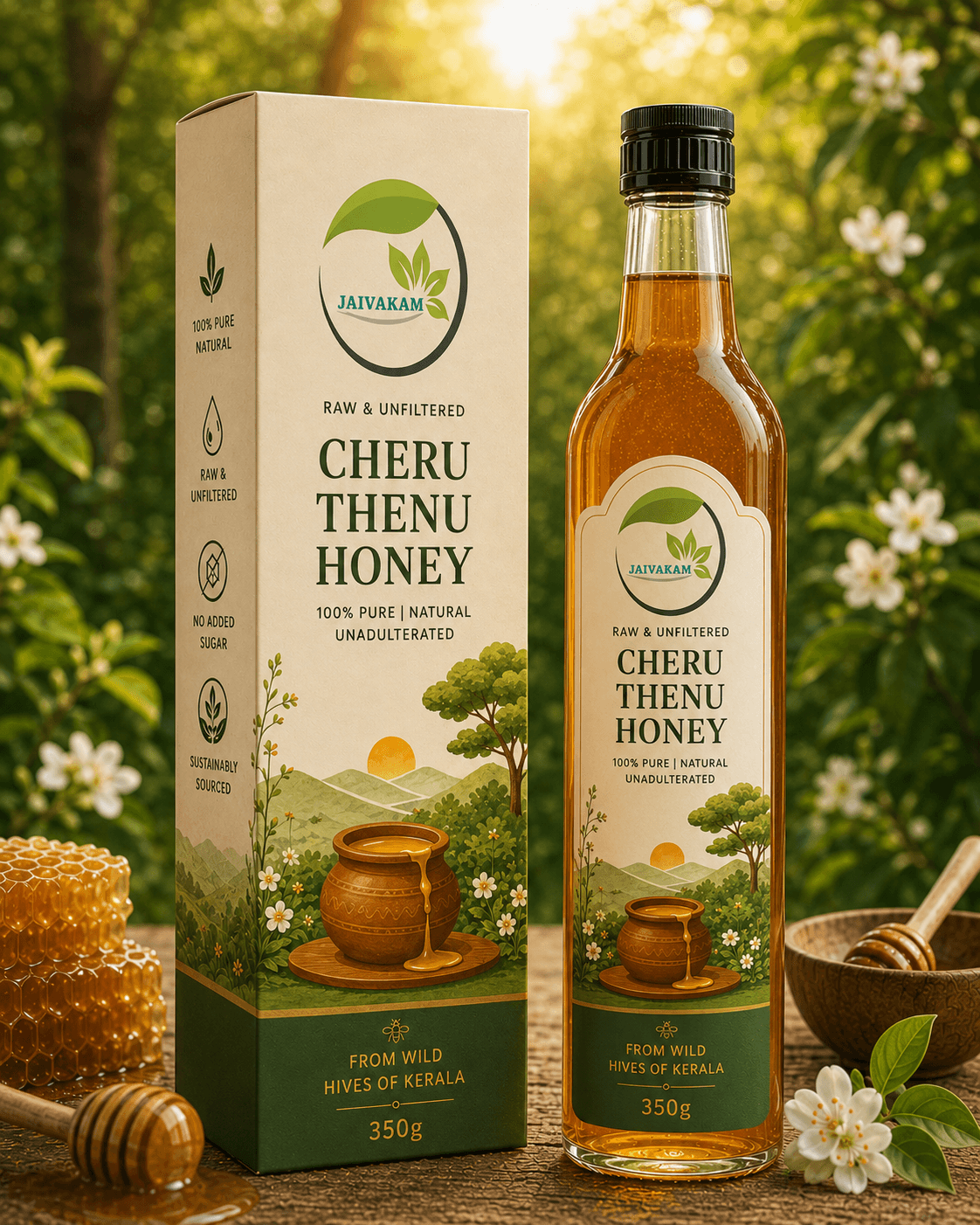
Not all honey comes from the bees you're picturing. Cheru Thenu comes from tiny stingless bees, nesting in hollow logs and clay pots — slow, rare, and tangy in a way regular honey isn't.
Cheru Thenu Honey: The Smaller, Slower Honey
Not all honey comes from the bees you're picturing. Cheru Thenu comes from stingless bees — tiny, quiet, and far less productive than the ones we usually think of.
That slowness is exactly why this honey tastes the way it does.
How It's Made
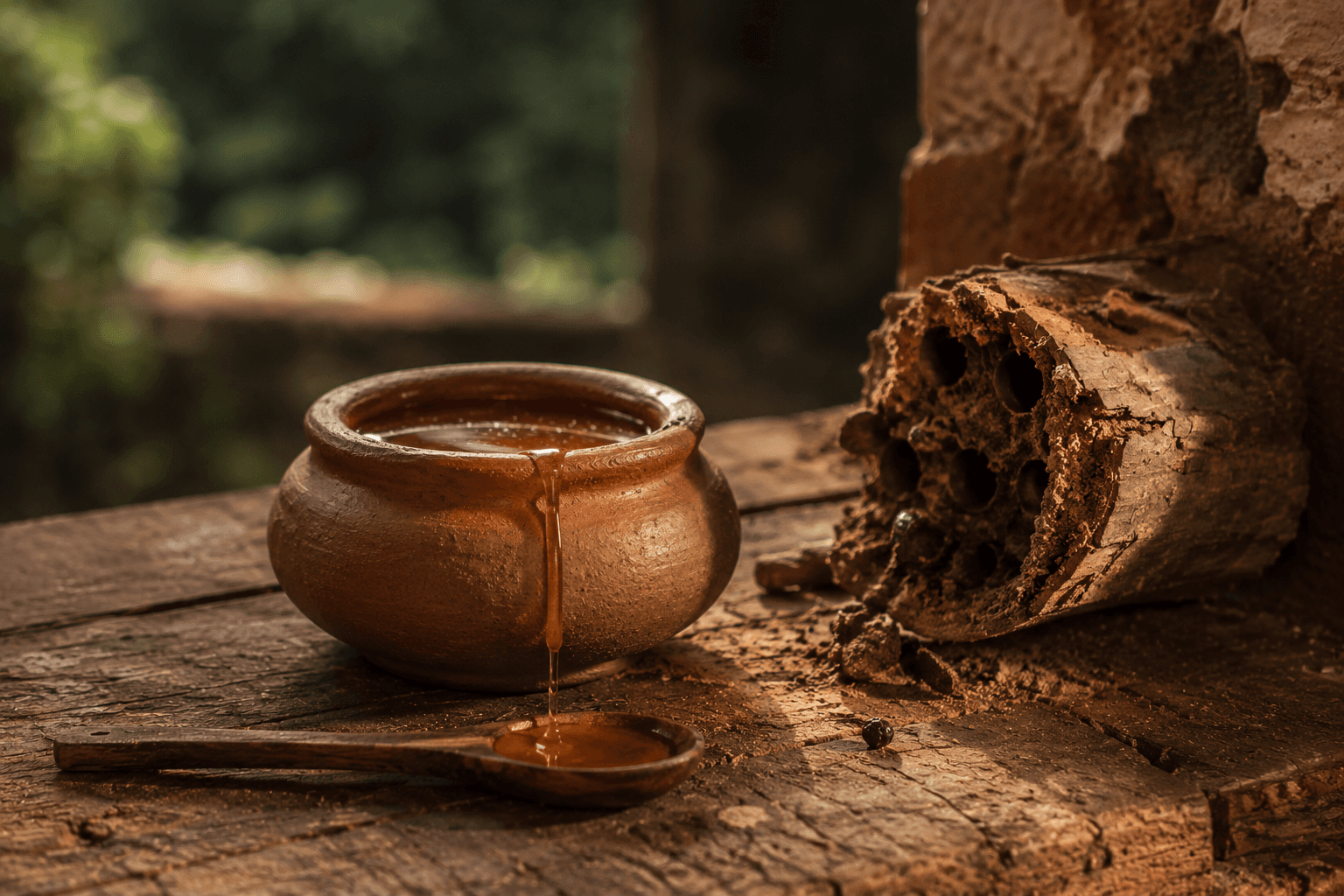
Cheru Thenu bees are small, stingless, and build their hives in narrow cavities — inside hollow logs, clay pots, or gaps in old walls, rather than the open combs larger bees build.
They also produce very little honey. Where a regular hive might yield generously, a Cheru Thenu hive gives only a small amount, stored in tiny wax-like pots inside the nest rather than uniform combs.
Harvesting is slow and careful. The pots are opened by hand, and the honey is drawn out gently — there's no forcing more out of a hive that simply doesn't have much to give.
Because of how it's stored in the nest, this honey is naturally thinner and more watery than regular honey, with a noticeably tangy, slightly sour edge to it. That's not a flaw — that's just what stingless bee honey tastes like.
Like our other honey, it isn't heated or processed. It's strained lightly to remove any wax fragments, then bottled as is.
Why It's Rare
Stingless bees simply don't make much honey — a fraction of what larger bee colonies produce. Combine that with the patience harvesting requires, and Cheru Thenu ends up being one of the smallest-batch things we make.
It's also why it doesn't behave like regular honey. It won't crystallize the same way, and its color and tartness shift depending on the season and what the bees foraged nearby.
Why We Still Make It
Cheru Thenu has been kept in Kerala's tharavadu homes for generations, often in small clay pots tucked into a wall or courtyard corner — not something bought in bulk, but something a household kept a little of.
We're continuing that, not scaling it. There's only so much of this honey to go around in any season, and we'd rather keep it exactly as small and slow as it's always been.
Pure. Traceable. From our farm to your home.